Very few homes are designed as pure mid century modern spaces. Most people are working with a mixture of furniture they already own, a room with its own architectural character, and a design direction that sits somewhere between styles. The challenge is not finding the right MCM piece, it is making that piece work alongside everything else.
The flat slab cabinet door is one of the most flexible design elements available for this situation, because it carries so little period-specific detail. A framed door or a highly ornate door belongs to a recognizable moment in design history. A flat slab door in a warm wood veneer can read as contemporary, Scandinavian, or mid-century modern depending on what surrounds it.
Start with a Neutral Base for Mid-Century Modern Cabinetry
A neutral base gives mid-century cabinets room to work without competing against other strong design decisions. White or warm off-white walls, light-toned floors, and minimal ceiling detail create a backdrop that is compatible with almost any furniture direction. The more neutral the base, the easier it is to layer in elements from different styles without the room reading as incoherent.
This is not a call for a blank or characterless interior. It is a recognition that the cabinetry will carry considerable visual weight, and the surrounding surfaces need to support rather than fight it.
Wooden Slab-Front Cabinets as the Design Foundation
The flat slab profile has no decorative detail that ties it to a specific period. This is its most useful quality in a mixed-style interior. Wooden slab-front cabinets in a light oak veneer can sit alongside contemporary furniture without looking out of place, because nothing about the door insists on a particular decade.
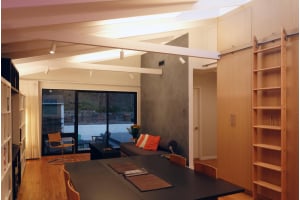
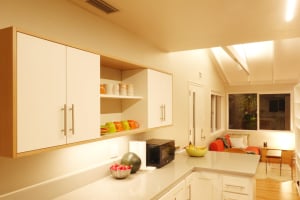
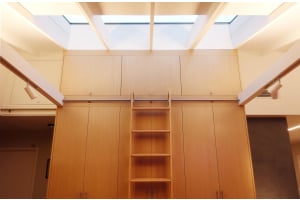
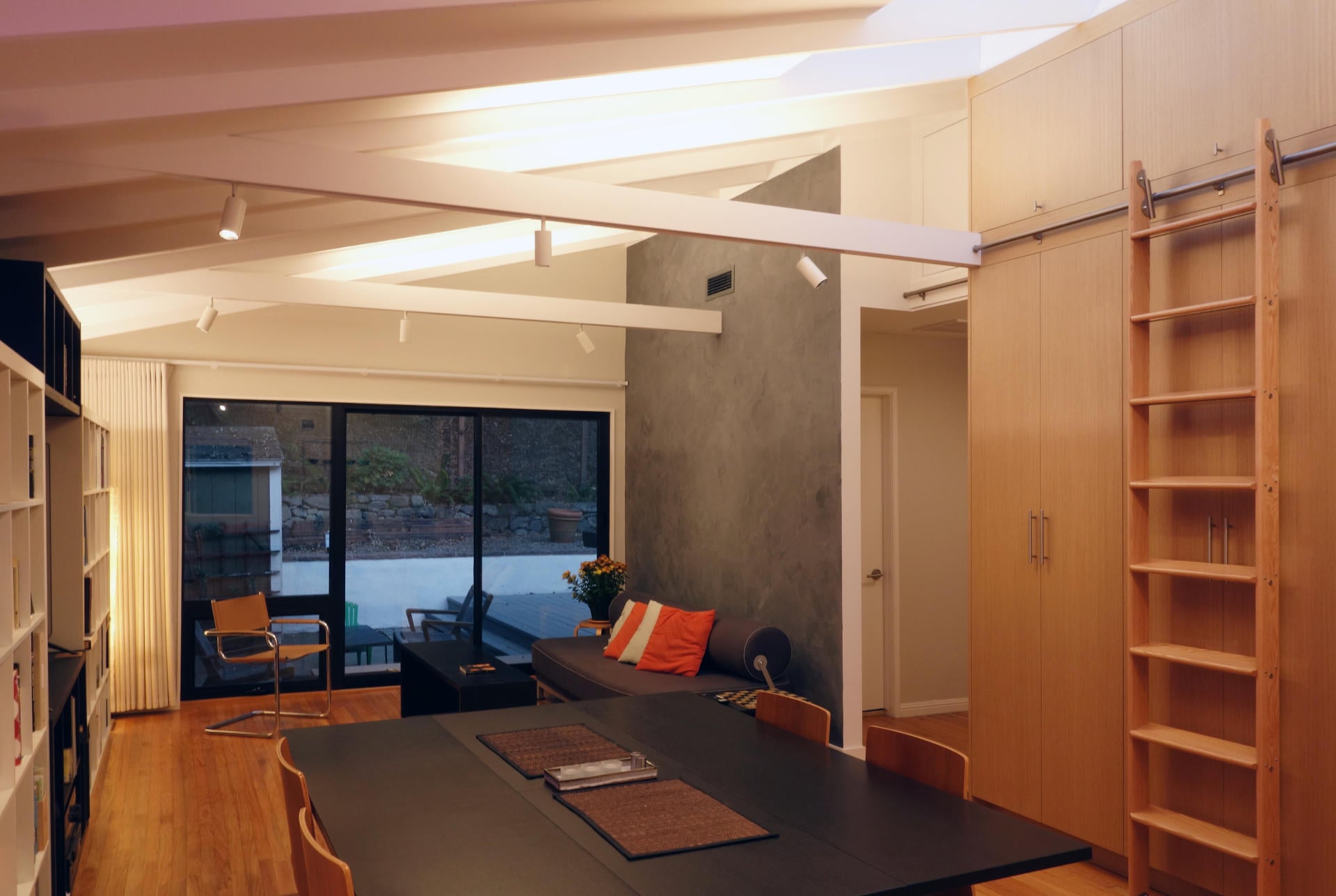
A clear illustration of this is the light oak and white pairing in a mid century modern home at 27eStore: the oak storage wall and white lacquer kitchen read together as a coherent mid-century modern design because each element has one clearly defined job, and neither is over-decorated.
In a home with predominantly contemporary furniture, mid century modern cabinet doors work because both styles share an aversion to unnecessary ornament. The common ground is the flat surface and the honest material. Century modern design and contemporary design are not in conflict, they share more of their underlying values than is often recognized.
How to Combine Furniture Styles Around Mid-Century Cabinets
Mixing furniture styles works best when one style is dominant and one is secondary. Two styles competing equally produce a room that reads as random rather than considered. One anchor and one complement is a more stable composition, and mid century modern kitchen cabinets or living room storage tends to function well as the anchor because the flat, restrained profile does not compete with most furniture.
Interior designers often work with a grouping principle in this context: odd numbers of objects in a grouping, with a clear size hierarchy. Three objects on a shelf, one large and two small. A dining table with a mix of chair styles, where one style accounts for most of the chairs and a second style appears at the ends. The eye reads this as intentional rather than accidental.
The home feels resolved when the different styles in a room share at least one quality: a material, a color, or a formal principle. Mid century modern cabinet doors in oak share warm tone with many contemporary wood furniture pieces. That connection is enough to hold the room together even when the furniture periods are different.
A Neutral Base and Sleek Quartz Countertops
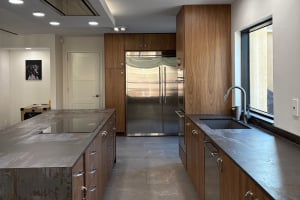
In a kitchen context, the combination of mid-century modern cabinet doors and sleek quartz countertops is one of the most successful mixed-style outcomes. The quartz is a contemporary material that reads cleanly alongside a flat slab veneer door because both surfaces are refined and without ornament. The countertop does not need to be historical to work in a mid century modern kitchen. It needs to be simple.
The same principle applies to the backsplash, the floor, and the ceiling. Century modern design tolerates contemporary finishes well as long as those finishes are clean and unpatterned. What it does not tolerate is decorative surface treatment that belongs to a different era.
Hardware as the Deciding Detail in Mid-Century Decor
Hardware is often what tips a mid century modern kitchen cabinet into one era or another. Bar pulls in brushed nickel, matte black, or satin brass read as contemporary or MCM. Knurled knobs or bin pulls read as traditional or industrial. In a mixed-style room, choosing hardware that is consistent with the cabinet door style, simple and linear, brings the decor together even when the surrounding furniture is coming from a different direction.
Oak cabinets in particular look well with satin brass hardware, which picks up the warm tone of the wood without being too literal about the historical period. Matte black bar pulls are the cleaner contemporary option. Both work within the mid century modern decor vocabulary.
Frequently Asked Questions
Getting the foundational elements in place first makes the mixing process considerably easier. For people working with existing cabinets that have the wrong door style, changing the cabinet doors is the most direct path to a mid century look without a full renovation.